
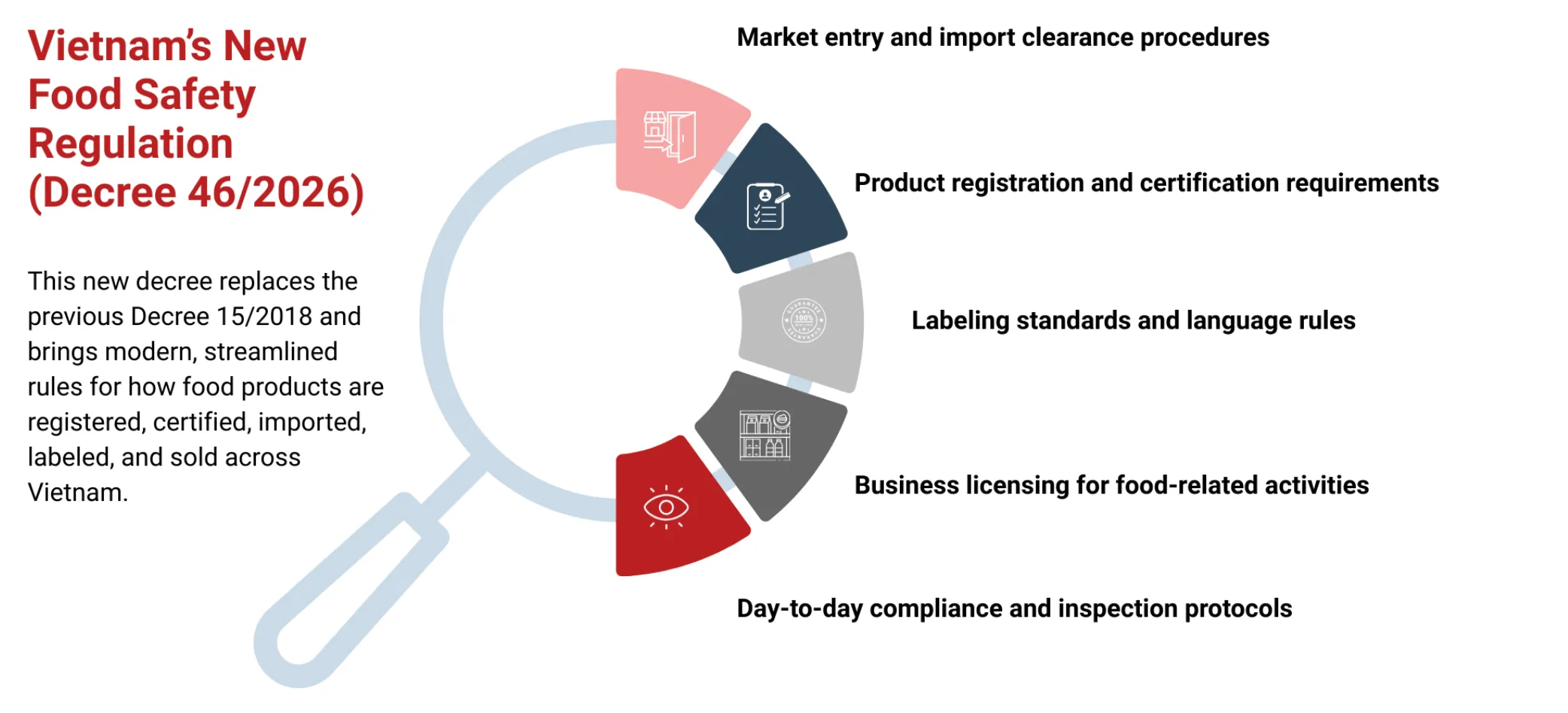
Proposed amendments to Vietnam’s Food Safety Law, alongside the ongoing development of related regulations, could reshape how products are developed, manufactured, imported, and brought to market. For international suppliers, the implications extend beyond regulatory compliance. Companies that can demonstrate product quality, provide robust technical documentation, and support local manufacturers in developing compliant products may be better positioned to build long-term partnerships in Vietnam.
From Ingredient Suppliers to Strategic Partners
For years, international companies have entered Vietnam through importers, distributors, and contract manufacturers. However, as quality and compliance requirements become more demanding, supplying a high-quality ingredient alone may no longer be enough to win customers.
Vietnamese manufacturers increasingly need reliable information on ingredient composition, active compound concentrations, purity, stability, and traceability. Documents such as Certificates of Analysis (COAs), technical specifications, safety assessments, and scientific studies are becoming important tools for evaluating suppliers and supporting product development.
This shift creates an advantage for international companies with established research and development (R&D) capabilities, robust quality management systems, and experience serving highly regulated markets. Conversely, suppliers with incomplete documentation or limited technical support may find it harder to convert initial interest into lasting commercial relationships.
Three Areas of Emerging Opportunity
First, demand for standardized, science-backed ingredients is creating new growth opportunities.
Plant extracts, vitamins, minerals, probiotics, prebiotics, and enzymes are among the ingredient categories that may attract growing interest from Vietnamese manufacturers. However, commercial success will increasingly depend on more than marketing claims. Suppliers must be able to demonstrate consistent quality, provide relevant scientific evidence, and clearly explain the intended applications and limitations of their ingredients.
Second, advanced formulation technologies can help manufacturers differentiate their products.
Technologies such as microencapsulation, lipid-based delivery systems, enhanced solubility, and improved ingredient stability can help address practical formulation challenges. Suppliers that offer application guidance, formulation support, and product testing are likely to deliver greater value than those focused solely on ingredient sales.
For manufacturers seeking to develop distinctive products, technical collaboration can be particularly valuable. Nevertheless, claims relating to bioavailability, absorption, or health benefits should be supported by appropriate evidence rather than assumed from the technology alone.
Third, digital traceability is creating opportunities across the supply chain.
Electronic COA management, batch identification, digital documentation, and ingredient traceability can strengthen quality control and improve the ability to respond to quality incidents. These capabilities may also help importers and manufacturers meet applicable documentation and traceability requirements more efficiently.
For international suppliers, investing in structured digital records can therefore support both operational efficiency and customer confidence.
Regulatory Readiness: A Foundation for Sustainable Growth
Despite the opportunities, international suppliers should not assume that an ingredient permitted in its country of origin automatically meets all applicable requirements in Vietnam. Regulatory suitability depends on factors such as ingredient composition, source, intended use, product classification, and the rules in force at the time of importation and commercialization.
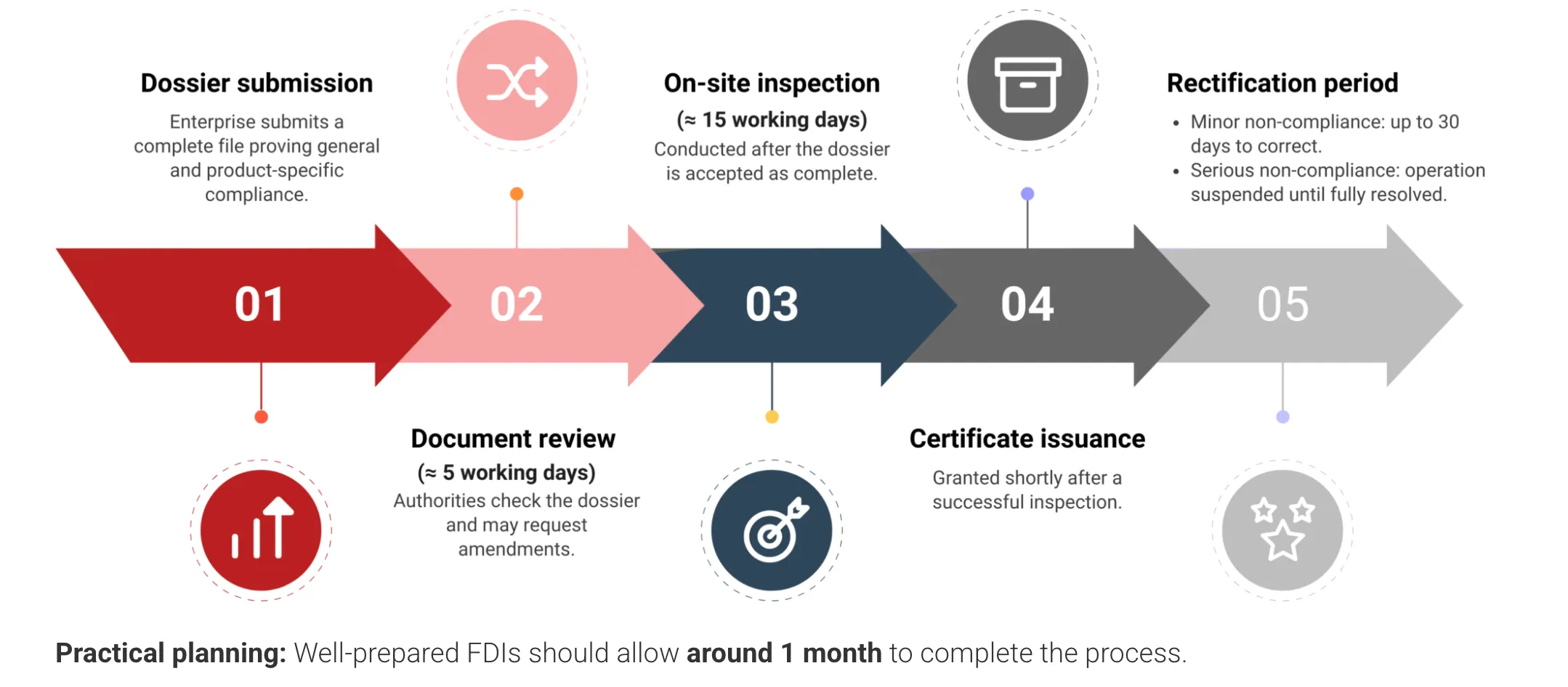
Suppliers should prepare a comprehensive technical dossier covering ingredient identification, specifications, COAs, analytical methods, safety data, relevant scientific literature, and traceability information.
Certifications and quality management systems, including ISO 22000, FSSC 22000, and HACCP, can help demonstrate manufacturing capabilities. However, they do not replace any specific legal approvals, registrations, or other requirements applicable to a particular product or business activity.
Equally important is the distinction between enacted legislation and proposed regulatory changes. Working closely with Vietnamese importers, manufacturers, and qualified local regulatory advisers can help suppliers identify documentation gaps, manage compliance risks, and avoid unrealistic commitments regarding product registration or market entry.
Building a Long-Term Presence in Vietnam
To capitalize on these opportunities, international suppliers should begin by identifying the right customer segments, including contract manufacturers, brand owners, ingredient distributors, and importers. Rather than relying exclusively on product catalogues and price lists, they should communicate a clear value proposition: the problem an ingredient or technology solves, the evidence supporting its benefits, and how it can be applied in a commercial formulation.
Providing samples, supporting R&D teams, offering technical training, and maintaining consistent supply can further strengthen customer relationships. Over time, a partnership built around joint product development and ongoing technical support may prove more resilient than one based primarily on price competition.
Vietnam remains a promising market for nutritional ingredients, dietary supplements, and food processing technologies. As its regulatory framework continues to evolve, companies that prioritize science, quality, transparency, and practical customer support will be better equipped to establish a sustainable competitive position.
For international suppliers, the strategic message is clear: success in Vietnam will depend not simply on selling ingredients, but on delivering evidence-based solutions that help local partners develop high-quality products and navigate an increasingly demanding marketplace.
Regulatory note: References to proposed amendments to Vietnam’s Food Safety Law should be verified against officially promulgated legislation, effective dates, transitional provisions, and applicable implementing regulations before commercial or compliance decisions are made.
Reference:
https://vanban.chinhphu.vn/du-thao-vbqppl/du-thao-luat-an-toan-thuc-pham-sua-doi-7929
https://vietnam.incorp.asia/vietnam-new-food-safety-regulation/
Hung Dang
Bài viết liên quan
Cùng chủ đề hoặc ngành — gợi ý đọc tiếp.